Monday, May 14, 2012

The Hiker Slump

Everyone on the trail is currently experiencing what I call "the hiker slump".  This isn't the Virginia Blues because we're not far enough into the state to be sick of it yet.

This hiker slump comes from having already hiked over 600 miles and being very used to the routine of the trail.  We have started spending too much money, drinking too much beer, and spending too many days in town.  It's hard to tell how long it will last.  I'm currently trying to pull myself out of the slump, but my theory is that others will remain in this slump until the end of Virginia or until they check their bank statements.  I think Trail Days this weekend will only worsen it for some.

I'm hoping we get out of this pattern soon, so we can continue to Maine.  A ridiculous amount of people have already dropped off the trail, so on the positive side, its a big accomplishment that we're even still on the trail.

Monday, May 7, 2012

Start of Virginia

I hit the Virginia state line about 2 miles before getting into Damascus.  Damascus is a very hiker friendly spot.  They hold the annual Trail Days festival, which is coming up in two weeks.  I reunited with Cheese Water and Sir Towelie there, and we hiked on into the Grayson Highlands.

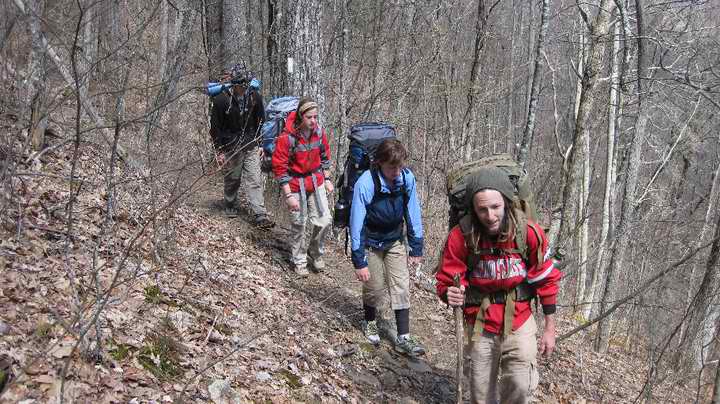
The day we entered the Grayson Highlands we also hit the 500 mile mark.  The Highlands are known for their ponies.  I thought I would just be seeing them from 20 feet away.  That wasn't the case.  They came right up to us wanting food.  They were licking the salt off our legs and packs.  I would compare them to over excited puppies.

It's been a rough week because the heat has been killer.  I've drank so much water throughout the days.  My Platypus holds 3 liters so I don't really run out.  I get to be picky about my water sources though, since I can carry so much.  I still haven't treated my water yet.  It seems like its going to be a hot, dry summer.  I might have to start treating if the water sources become few and far between.

It's crazy how quickly the weather has been changing.  A few weeks ago we had some crazy snow.  A lot of people had already sent home their cold weather gear, but I was lucky because I still had mine.  I had one really bad day in the snow.  I had to do 16 miles to a shelter, and it was getting dark just as I was climbing Roan Mountain.  The shelter should have been at the top, but it wasn't well marked.  By the time I checked my data book, I was almost 2 miles from the shelter.  It was dark out, and I had to set up camp where I was.  There were no trees to block the wind, so my tent was blowing all over the place.  I was by myself, and I woke up with my tent covered in several inches of snow.  I met up with my buddy Subway in the morning, and to top it all off, we got lost for 2 hours on the top of a freezing, cloudy mountain. Virginia is supposed to be pretty mellow compared to what I've already hiked. It's still pretty rough because I'm doing more miles than I was before. The next big thing is Trail Days. After that I'm aqua blazing the Shenandoahs. That's when you take a kayak or canoe down the river. hours

Sunday, April 22, 2012

Tennessee and North Carolina

Within a week or so, I should be getting into Virginia.  For the past few weeks, the trail has been weaving between North Carolina and Tennessee so we never really know where we're at.  Damascus, VA is coming up though.  It marks the forth and longest state.  I'll also be hitting the 500 mile mark shortly after getting into VA.  So, I have a pretty exciting two weeks coming up.

Stryder left to go back to Georgia right after the Smokies.  Before he left though, we did some trail magic.  We built a fire close to Standing Bear Hostel and spent the day cooking.  I made 16 calzones over the day.  Stryder made fried zoo-zoos.  They're these cinnamon rolls wrapped around Snickers, fried in oil, and covered with icing.  Good stuff.

I booked it into Hot Springs because I was trying to ditch a swarm of annoying dudes.  I didn't realize that getting hit on all the time could be such a pain in the ass.  Three miles from Hot Springs, my friend Slopes (not one of the annoying people) caught up to me.  We went into town, got some bunks in the hostel, and went in search of food.  We ran into Tyvek who had just got a jar of apple pie moonshine, then we walked down towards to bar.  It was my friend Tarzahn's last night before he went off the trail, so that pretty much decided my plans for the evening.  A big group of us hung out at the bar until closing time.  When Tarzahn was going to bed, he yelled back at me, "I'll see you up the trail!"

The next day it took a while to get out of Hot Springs.  Once we did get on the trail, it took about 6 hours to hike 8 miles.  I got to a camp spot in the dark with my friends Cheese Water and Sir Towelly.  It was Pace's birthday, so I made calzones for her and everybody else.  Watermelon made cake-in-an-orange on the fire as well.  It was a pretty sweet evening.

It took a few more days to get to Erwin, Tennessee.  I pulled a 21 mile day into town.  I don't normally like to hike that much, but it was raining and I was cold.  I went to Uncle Johnny's hostel and got a spot in a cabin.  The next day, Cheese Water and Sir Towelly talked me into doing a slack pack.  Basically, the hostel drives you ahead with small bookbags and you hike back.  Unfortunately, a guy named Just Jim fell and hurt his ankle on the slack pack.  We were luckily with a couple called Sun Kissed and Jesse.  She's a nurse and he's a Wilderness First Responder.  So, the took care of his ankle and hiked him back to the road crossing to be picked up by the hostel.

My parents came into town for the weekend to visit me.  They replaced my broken headlamp and spork for me.  On Saturday, we went to a road crossing to do trail magic for everybody.  We had stuff for Troyer's trail bologna and swiss cheese sandwiches for everybody.  Dad made beans and we had tons of cookies, snacks, pop, and beer.  The hikers loved it.  Everybody that hiked by spent several hours hanging out.  We had started the day with about 5 cases of beer, but those were all gone by the time we packed up.  Our bottle of wine was drank too.

On to Virginia!

Saturday, April 7, 2012

Smokey Mountains

My trip through the Smokies has been pretty interesting.  I camped out with Stryder and two other guys called Detour and Slopes one night.  Well apparently you're only allowed to sleep in shelters in the Smokies.  A ranger came along in the morning and slapped us all with $75 fines each.  That was pretty lame.

Other than that, the Smokies have been really beautiful.  We hit the 200 mile mark and reached the highest point on the trail in the same day.  Clingman's Dome is the highest point.  It's a cool tower that has a 360 degree view over the entire park.  It's also a tourist attraction, and us hikers are quite the spectacle.  I think people really get a kick out of talking to us and checking out our gear.

The weather has been COLD.  It's the worst at night and in the mornings.  I've been sleeping with all my clothes on in my 30 degree bag, and I still wake up cold at night.  It's been hard to get started in the morning.  We've also had a few bad thunder storms that have just soaked e everything.  I don't want to complain though because I know I'll be missing the chilly weather when its hot this summer.

There's about three rotations of hikers leaving in the morning.  There's the old guys that get started at 6:30 or 7 am. There's the people that leave at the most reasonable times, 8:30 or 9.  Then there's the group I'm part of: we don't hit the trail until 10 to 11.  We generally stop in the middle of the day, get distracted, and take a 2 or 3 hour break.  We've been rolling into camp only a little before dark.  We still do the same miles as everyone else.  It's just that a lot of people get to camp around 3 pm.

I ran into some awesome trail magic today.  This couple made all the hikers grilled cheese and they had brownies, fruit, chips, and pop.  Then they gave a bunch of hikers rides into town.  They said they do this every Saturday and Sunday.  They were really nice people.

My next town is Hot Springs, and its not for 70 more miles so who knows when I'll get there.

Tuesday, April 3, 2012

Starting the Smokies

So, I'm sitting in some fancy lobby of this Lodge at Fontana Dam, the start of the Smokies.  I sort of randomly ended up here.  Stryder and I were trying to hitch into town for our resupply, and this is where we got dropped off.  Turns out, they had a buffet breakfast, so I hit that up.  Then another hiker bought me a very strong screwdriver.  There are a few other very hungover hikers here, and nobody has made very much progress toward getting to the trail yet.

Yesterday I did an 18 mile day because we really wanted to stay at the Fontana Hilton.  It's a huge, really nice shelter with a 24 person capacity.  There were free showers, restrooms, and lots of benches.  You never get that at shelters, so it was worth the hike. 

I stayed at the NOC a few nights ago.  They had bunks in the cabins for hikers to sleep on.  I spent way to much money at the outfitter because I needed a new pack cover.  Mine was too small.  Pack covers are normally $25, but I had to pay $45.  I guess the prices are higher because its the peak of the season and the outfitter was right on the trail. 

Coming out of the NOC was an 8 mile uphill, which sucked.  But I have a 9 mile uphill to look forward to today.  It's hard to get into the Smokies, but once you're up there, apparently its all ridge walks with awesome views.  Ridge walking just kind of means you're high up in the mountains and you hover up there.  You don't have to go all the way up and down every mountain.

So, I've been getting these awful T-shirt tan lines, and I wanted to get a tank top so it wouldn't be so bad.  Stryder found an abandoned tank top at a shelter for me.  It's the right size, but its cotton and it kind of smells bad.  But I guess beggars can't be choosers.  It'll do for now.

Thursday, March 29, 2012

First Week

Ok, so I've had an awesome first week on the trail.  The Wolf Pack and I covered 53 miles.  Monk and Thumper (or Trey and Foreman) hit their personal 100 miles on the AT mark.  Ruth got the name Inch Worm, and Dana became Trooper.  We met some pretty cool people.  We also celebrated Monk's birthday with fire roasted cinnamon rolls and my trail calzones. 

We had rain for about 3 days straight, so we spent a lot of time being cold and wet.  Every time our clothes, tents, and sleeping bags would dry out it would just rain again.  It wasn't too miserable though.  We came across some trail magic on one cold day and got to sit under a tent.  I don't mind the rain too much.  I keep telling myself it's the trails way of weeding out the people that aren't gonna make it.  I think there's a phrase: No rain, no Maine.

A few days ago, I crossed the border into North Carolina.  It was kind of funny, because there was a huge group of hikers sitting on a rock by the sign.  No one said anything to me as I hiked up, then when I crossed the border, everyone started cheering.  I joined them on the rock, and we did the same for the next few hikers.

I also hit the100 mile mark, so that was exciting.  My friend Stryder came out to the trail and is hiking the Smokies with me.  I also met a cool group of boys from Long Island I've been hiking with. 

Monday, March 5, 2012

What To Wear Hiking

You're going to need some durable clothes for your hike.  Clothes designed for athletics tend to be more pricey than normal clothes, but you'll be wearing the same stuff everyday.  Consider good clothes to be an investment.  Synthetic materials are the best because they're lightweight, and they dry quickly.  Cotton is the worst.  If it gets wet, it will be cold and take a long time to dry.  Also, remember to layer your clothes if it's cold.

Keep in mind that the first month or two will be colder than the rest of your hike.  It's likely that you'll run into snow in the Smokies.  Some of your clothes can be mailed home or ditched in a hiker box once the weather warms up for good.  These are just suggestions.  You'll probably have your own preferences.

-synthetic t-shirt: this is pretty much a staple, and you'll probably wear it everyday.
-rain jacket: this is great to have because it not only keeps you dry, but you can wear it when you're cold too.
-convertible pants: they zip off above the knee, so they can be shorts or pants.
-long-sleeved shirt: good for nighttime or cold weather.
-synthetic shorts: something loose and breathable.
-wool socks: bring 2 or 3 pairs; you'll probably have to replace them a few times during your hike.
-sports bra (if necessary)

Other options:
-running skirt: these are getting pretty popular on the trail because they're super comfortable and they look cute.
-hiking kilt (for men): most guys think these are for wussies, until they give them a try and see how comfortable they are; I thought they were nerdy until I ran into one hiker that looked like a Gladiator in his kilt.

Cold weather clothes (send home when weather warms up):
-beanie/cap: keep your ears warm.
-gloves: you can probably get by without them if you don't want to carry them, but they're nice to have.
-yoga pants/ long underwear
-fleece/ flannel/ long-sleeve shirt

Of course you'll need a comfortable pair of hiking boots or shoes.  A lot of hikers like to have a pair of sandals to wear around camp, as well.

Sunday, March 4, 2012

What to Eat on the Trail

Food is probably the most important thing you'll need to sustain yourself on the trail.  You'll be eating anywhere from 3000 to 6000 calories a day, and you don't want to get bored with your diet.  I'll list the basics that are easy to prepare, and then we'll talk about more creative food ideas.

The Basics:
-oatmeal packets
-Clif bars/ other energy bars
-Ramen noodles
-instant mashed potatoes
-peanut butter
-Nutella
-granola/ oat bars
-pasta sides
-dried fruit and vegetables
-beans and rice
-string cheese
-bagels/ English muffins
-trail mix
-jerky
-Crystal Light
-tea/ hot cocoa
-box mac & cheese
-Pop-Tarts

Trail Meals:
-Easy Pad Thai
Cook oriental flavored Ramen noodles.  Add a spoonful of peanut butter and a spoonful of Nutella.
-Burritos
Cook some beans and rice or used dehydrated refried beans.  Add string cheese.  Use sauce packets (stock up on them when you go to Taco Bell).
-Spaghetti
Cook pasta.  Pour in powered pasta sauce and add a little extra water.
-Pizza bagel
Add sauce to a bagel half.  Put cheese on top.  Set on a rock by the fire to toast.
-Noodles and potatos
Cook Ramen noodles.  Pour in instant mashed potatoes to soak up extra water.
-Cinnamon Rolls
Buy a tube of cinnamon rolls.  Find a stick in the woods.  Wrap a roll around the end of the stick and cook over the fire.  Add frosting.
-Holiday Dinner
(Best done with a group.  Most hikers will spend Easter on the trail, so this is an idea.)
Cook a box of instant mashed potatoes and instant stuffing.  Pass around some jerky.  Roast croissants over the fire.  Do cinnamon rolls for dessert.

You should stock up on sauces because that will add a lot of flavor to your meals.  There are also lots of powered sauces available like pasta sauce, alfredo sauce, and Mexican seasoning.  Be sure that your food has a high calorie to weight content.  Let junk food become your best friend, but sure to get a healthy dose of fruit and veggies while you're in towns.

Really, you can and should eat whatever you want on the trail.  Nothing will put you in a funk faster than not getting enough to eat.  You should keep a variety in your diet, so you don't get bored.


Thursday, March 1, 2012

2 Weeks and Counting

OK, so I've decided to start a personal blog section.  I'll be leaving for the trail in about 16 days.  I'm riding to Georgia with a few friends that will be on spring break from Ohio State.  We'll start at Springer Mountain, and they'll be hiking with me for about a week.

Trey and Foreman (or Monk and Thumper) did Georgia with me last year, but two of the other girls in the group haven't done it yet.  Anyway, I need to hike that section again to technically consider it a thru-hike.  I'm pretty excited that I get to spend my first week on the trail with friends from college.  I'm also happy that we decided not to hike the Approach Trail again.  We did it last year, and it was brutal.  I do have to stop at Amicolola Falls State Park though to register as a thru-hiker.

As far as my gear goes, I'm pretty prepared.  I have my base weight around 20 pounds, which is good considering my tent alone weighs 5 pounds.  I'm using a 2-person Marmot tent that I love.  I do have a 1-person tent that isn't very sturdy, and I didn't feel like forking over the money for a new tent.  I think after the first part of the trail, when the crowd starts thinning out, I'll just mail my tent home and get a tarp.  I prefer sleeping in shelters anyway.

I also got a new pack.  I upgraded to the Osprey Aura 65 in Eggplant Purple.  It's really comfortable, it has a mesh back, and the hip belt and back panel adjust.  It is a little small though.  I pack light, so it's not a big issue.  My only thing is that I like to keep all my gear, including my sleeping pad, on the inside of my pack.  Sadly, I have to strap my sleeping pad to the outside of my pack now.  I also switched to a Platypus hydration reservoir, instead of just using water bottles.  I'm hoping that I'll drink more water when I don't have to get my water bottle out every time I want a drink.

Now all I really have to do is buy food for the first few days of the trip and mentally prepare myself.  I think the mental preparation will be the most difficult.  I've been living with my parents for the past few months, and I'm a substitute teacher and a freelance writer.  So I don't have to worry about quitting my job or moving out of my apartment or anything.  I just have to adjust to living in the woods for 5 months at a time.  I think it will be one of those things that doesn't really hit me until I'm on the trail.  I'm mostly excited though.

My Hike

Pre-Hike: 2 Weeks and Counting

Tuesday, February 28, 2012

Ten Reasons to Hike the Appalachian Trail

I've made a list of ten reasons to hike the AT for those of you that need a little extra coercion into quitting your jobs, leaving your friends and family, and living in the woods for months at a time.

1.  The hiker community on the AT is amazing.  It's so tight-knit that you'll feel right at home.  Hikers look out for each other.  When you're on the trail, everybody you pass will say hi and chat with you.  It doesn't matter what your age, demographic, or income bracket is in regular life; on the trail, people look at who you are as a person.  The people in towns are great too.  You might just start chatting with a random person and before you know it, you're at their house and they're cooking you dinner.

2.  You get to go on an actual adventure.  How often in your daily life do you actually get your blood pumping out of excitement?  Walking over 2,000 miles through the woods with the goal of reaching Katahdin sounds like the kind of thing you would read about in a children's fantasy novel.  Well, guess what.  It's your life now.

3.  Simplify your life.  No emails, texts, deadlines, clients, professors, or bosses.  You don't have to call anyone back.  You don't have to fill up your gas tank or shave your beard.  Heck, you don't even have to shower if you don't want to.  Your biggest concern of the day is where you're going to find water next or where you're going to sleep tonight.

4.  Your ass is going to look good in your skinny jeans when you're done.  Or you'll lose all that extra weight you've been packing on for the past few years.  Even if you don't care about skinny jeans, your muscles will still be rock hard when it's time to go home.

5.  (For the ladies) There's tons of guys everywhere.  (For men) Women will swoon at your manliness when you get home.  OK, so the guys kind of get the short end of the stick when it comes to dating on the trail.  These numbers aren't exact, but I've noticed about 1 girl to every 4 guys on the AT.  That's right, tons of of rugged, manly men everywhere and hardly any girls at all.  But don't worry guys, there will be plenty of women when you get home.  You'll be in top physical shape and have an arsenal of stories to woo the ladies with.  Just watch out for trail goggles.

6.  Do something physically and mentally challenging.  Nobody's going to tell you that hiking the AT is easy.  You probably will hear that anyone is physically capable of doing it.  You're essentially just putting one foot in front of the other.  Yes, anyone can do it if they really want to.  It's the mental part that will be the hardest.  You have to make yourself keep hiking even when it's been raining for two days, the weather is scorching hot, or there's a cloud of bugs following you.

7.  You have a chunk of free time in your life.  Maybe you just retired, graduated college or high school, came back from Iraq or Afghanistan, or got laid off from your job.  Now is a great time to go hiking.  Why not have a little adventure before you go back to the real world?  I once met a guy in Georgia that told me he quit his job of 8 years to hit the trail.  I met a couple that didn't get into the grad school they wanted, so they went hiking instead.  Even if you have to quit your stable job, so what?  At least you can make your day dreams a reality.  


8.  See the beautiful mountain scenery.  The Appalachian Trail offers some amazing views that are difficult to find elsewhere.  While it's true that most of the trail just offers views of trees and dirt, there is something rewarding about hiking to the top of a mountain and being able to see for miles.  Some of the largest mountains do have roads that will take tourists to the top, but you get the satisfaction of knowing you walked up.  And that makes the mountains you can't drive up even better.

9.  Everything you need you can carry in your backpack.  There's a sense of freedom that comes with being able to go where you please and only have a responsibility to yourself.  Your car, cell phone, iPad, and Facebook just seem like extras when you survive with only a backpack of possessions for months at a time.

10.  It's the cheapest 4-6 month long vacation you'll ever go on.  Hiking is an extremely inexpensive activity.  The initial gear purchases can get pricey, but once you have your gear you don't have to worry about it.  As far as the actual hike goes, your main expense will be food.  Occasionally you get to stay in a hostel, but those normally only run $10-15 a night.  Sometimes you can even do work-for-stay.  You can definitely get by on your hike for about $1,500.  However, if you have money to spend, you can stay in hotels and have big meals while you're in towns.

Thursday, February 9, 2012

Trail Literature

If you're thinking about hiking the Appalachian Trail, it might be helpful to read up on it.  There are a lot of books available, but these are the ones I find most helpful and interesting.

Memoirs:

Becoming Odyssa by Jennifer Pharr Davis is an awesome read.  A 21-year-old girl tells her story of antics, stalkers, and friendship while she hikes from Georgia to Maine.  I liked this book because most trail memoirs are written by older men.  This might be the only book out right now by a young, female thru-hiker.

Hiking Through by Paul Stutzman is another good read.  It has a more religious tone to it.  We follow the author on his journey to Maine, while he recovers from his wife's death to cancer.  His message is to live life right now because you never know when your plans are going to fall through.

A Walk in the Woods by Bill Bryson is another interesting memoir.  He doesn't actually hike the entire trail and many people will argue that he's not a good hiker.  However, this book is really, really funny!  You do get an idea of what trail life is like, and it demonstrates the hiker belief to "hike your own hike."

How-To Books:

Allen and Mike's Really Cool Backpackin' Book is an awesome instructional read.  It's not geared specifically toward the Appalachian Trail, but it's still incredibly helpful.  It's entertaining too.  They have tons of illustrations that demonstrate the correct way to do things.

Try How To Hike the A.T. by Michelle Ray for a book that's geared toward the AT and covers probably everything you were ever wondering about thru-hiking.

Data Books:
You want a good data book to bring on your trip with you.  They show landmarks, water sources, shelters, towns, elevations, and many other things.  Which data book you choose is all about personal preference, but none of them will leave you lost in the middle of the woods.  Get a current version because they update them every year.

The Appalachian Trail Data Book is a no frills, basic information guide.  It's significantly lighter than other books because it only gives you need to know information.  At the same time, it still marks shelters, landmarks, water sources, road crossings to towns and other things.  It doesn't map out the actual towns or elevations.

The A.T. Guide will give you everything that's in the Data Book, plus more.  It draws out the mountains with elevations and where everything is at in relation.  It also has helpful information about the towns, like prices of hostels and where you can find shuttles.

The Thru-Hiker's Companion will give you basically everything that's in the A.T. Guide, minus the drawings of elevations.  The elevations are written in.


Sunday, February 5, 2012

Choosing a Tent

Hiking the Appalachian Trail takes anywhere from 4 to 6 months, and since you can't go home every night, you'll need somewhere to sleep.  There's countless types of tents to choose from along with other options.

Everyone has different preferences, so here's a few things to keep in mind while shopping for tents:


How easy is it to set up?
How much does it weigh?
How many people are going to be sleeping in it?
How much space does it have?
What's the price?
Is it ventilated well?

Keep those things in mind while you consider all the options for shelter on the Appalachian Trail.

Shelters, Huts, and Lean-Tos:
There are hundreds of shelters, huts, and lean-tos along the trail.  They're basically the same thing, but with different names.  These are usually placed in areas that have a water sources close by, and there is usually an outhouse too.  Even if you're not staying in the shelter, there's always somewhere to tent.  Many hikers prefer to get a spot in the shelter, and not set up their tents.  However, you can't rely on getting a spot in the shelters every night during the first few hundred miles of the trail.  There's too many other people on the trail attempting thru-hikes, but eventually they will start to drop off.

Tarps:
If you can learn to tie a few knots and don't mind laying your sleeping pad on the ground, you can use a tarp as your shelter.  You'll be using cord to string the tarp up between trees.  Tarps are great because they're extremely light to carry and they don't take up very much valuable pack space.  Combine tarp carrying with sleeping in shelters, and you'll lower your pack weight but remain comfortable.

Free-Standing Tents:
Free-standing tents are just tents that stay up by themselves once you put the poles in.  You still have to stake them to the ground, so they won't blow away.  You can pay a lot of money for super lightweight tents, but in general this is the heaviest option.  On the plus side, they're easy to set up and are roomy.  You can set them up anywhere; you don't need trees.  They're very sturdy too; they don't blow around as much in the wind and harsh weather.  I've used a tent that was only partially free-standing, and it would always be caving in by morning and wasn't very sturdy.  Tying guy lines will help with this problem, but I really don't like the extra hassle and carrying extra stakes.  Some people don't mind though.  Prices vary anywhere from $100-$600.
REI is a good place to start looking for a tent.  They have a wide variety of brands and types of tents. 

Other Types of Tents:
There's a variety of semi-freestanding tents available.  You usually have to secure them with guy lines.  They weigh less because they require fewer (if any) poles for set up.  If you hike with trekking poles, there are tents that are designed to be set up with the trekking poles instead of carrying poles that only function for the tent.  Check out Tarptent for lightweight tents that start around $200.
Hammocks are also becoming pretty popular on the trail.  They have a rainfly that protects the netted hammock part.  You don't have to worry about finding a level area of ground or sleeping on a hard surface.  No poles, means less weight.  You wouldn't necessarily need a sleeping pad either.
As far as hammocks go, Hennessy Hammock is the way to go.  Prices start at $100.

Thursday, January 26, 2012

Water Treatment

There's a variety of options when it comes to treating your water on the trail.  When choosing a method, you want to take into account the cost, added weight, efficiency, time it takes, and how much chemicals are involved.  Here are a few popular options:

Many hikers choose not to treat their water at all.  This saves on expenses and pack weight.  While they are more susceptible to bacteria and viruses, they probably build some sort of immunity after a while.  Plus, they aren't adding any extra chemicals to their bodies.

Boiling water is another option.  You don't have to pay anything extra for a treatment system, but you're still purifying your water.  This is a time consuming process, and it's probably not for you if you like to put in big miles daily.  Also, this consumes precious fuel that could be used for cooking.  However, if you don't mind building fires, then you can save your fuel supply.

Another option is the Steripen.  It eliminates almost 100% of bacteria and viruses.  It works by using ultraviolet light to make water safe to drink.  It only takes about 30 seconds to a full minute (depending on how many liters of water you have) to sterilize your drinking water.  You can spend anywhere from $60 to $120 on a Steripen, and the more lightweight ones do cost more.  Also, they require Lithium batteries which are more expensive.  I used my Steripen on a 3-week backpacking trip, and it broke on me.  I don't know if this is the case for everyone, but the company is pretty good about replacing broken products.

Iodine tablets and chlorine are inexpensive and lightweight.  They come in a small bottle and normally only cost about $10.  They do discolor and add a weird taste to your water.  You can solve this problem by either getting an additional bottle of taste-neutrailizer or adding Gatorade packets to your water.  You will usually have to wait at least a half hour before your water is safe to drink.  You can get these treatment systems at most athletic stores that have a camping section.  Along a similar line, I have heard of people who add 2 drops of regular bleach to their water.  I'm not sure how healthy this is for your body, but it can't be much worse than iodine.

Water filters are another option for water treatment.  This method, unlike the others listed above, gets rid of debris so you don't have any dirt floating in your water.  Water filters get rid of parasites and bacteria, but not viruses.  It doesn't change the taste of your water either.  When buying a water filter, you should consider how often it needs to be cleaned and how often the filter needs to be replaced.  There's a variety of different brands to choose from, and the cost can run anywhere from $20 to $250.  While there are lightweight filters available, for the most part this method adds the most weight to your pack.

Not one method is right for everyone.  If you're not sure, I would choose the most inexpensive method to start with or buy the product second-hand.  Then if you're not happy, you can choose a more expensive option.

To Hike Alone or with a Partner


Deciding whether you would rather hike alone or with a partner is a huge decision.  There are upsides and downsides to both options.

If you're planning on thru-hiking, chances are you won't be able to convince any of your friends to quit their jobs and come hiking with you.  But who knows, you might get lucky.  Having a hiking partner is great because you're never lonely, you have someone to help you with tasks, and you're family and friends at home don't have to worry about your safety so much.  You guys can split the weight of gear, such as the tent, cooking stove, and data books.  It saves time too; one person can fill up the water bottles while the other person sets up the tent.  If you're thinking about hiking Southbound, the trail can get pretty lonely because most hikers choose to go Northbound.  Having a partner will still give you the sense of solitude in the wilderness, but you'll still have a bit of company.

Solo hiking is a great experience too.  You get to hike at your own pace, do as many or as few miles as you want, and you don't have to consult with anyone if you want to make a detour.  You'll still meet awesome people on a daily basis because the trail is such a tight-knit community.  It's also easier to plan your hike financially if you're hiking alone.  If you have some extra money to spend, you can seek out the comforts of hostels and motels regularly.  Or if you're on a tight budget, you don't have to feel guilty because your partner is missing out on that hot shower and nice meal that they wanted.  Hiking solo also gives you a huge sense of independence and self-reliance.  Not everybody has the will-power to go into the wilderness alone and do something as challenging as a thru-hike.

Even if you start a hike solo but really want a partner, the opportunity is still there.  During the first few hundred miles, other individuals are also seeking companionship.  This is a great time to find someone that shares your hiking style.  But be careful not to jump into something permanent just because you're lonely.  You don't want to end up with a hiking partner that annoys you.  Hold out, and you can definitely find a hiking partner that you love having around.

The last, and in my opinion best, option is to have friends meet you on the trail for short periods of time.  It's always a good time to get a taste of home.  After hearing of your plans for a thru-hike, many of your friends will probably be curious about what it's like to spend some time on the trail.  Maybe you can even convince your parents to join you for awhile.  Not to mention, you friends will go home and tell stories of how awesome you are at building fires and locating water sources.

Regardless of if you decide to hike solo or with a partner, you'll find a feeling of camaraderie and a sense of kinship among fellow hikers.  There's a saying on the AT:  Instant family.  Just add trail.


Thursday, January 19, 2012

Dehydrate Fruit and Vegetables in the Oven


It's difficult to get enough fruit and vegetables on the trail. They're very heavy to carry and bruise easily. However, if you dehydrate them ahead of time, they're awesome to have. You can snack on the fruit during the day. Veggies can be re-hydrated and cooked for dinner.

You can always buy dehydrated food in the store, but it will be expensive. There are also some great dehydrators that you can purchase. The cheapest method, however, is to dehydrate food in your oven.

Things you'll need:

  • your fruit or veggies of choice (apples, bananas, papayas, onions, potatoes, peppers, etc.)
  • lemon juice
  • an oven
  • baking sheet
  • parchment or wax paper
  • a large jar

Step 1: Preheat oven to anywhere from 130-180 degrees.  Rinse your fruit or veggies off in the sink.  Then peel the skin off, and cut off any bruises.  Slice into even sized pieces.


Step 2: Make a mixture of lemon juice and water.  It should be about 1 part lemon juice to every 5 parts water.  You're going to soak your fruit or veggies in this mixture for at least 5 minutes.  I find it easiest to toss my veggies in as I cut them.


Step 3: Dry fruit or veggies off with a clean towel.  Put a piece of parchment or wax paper on a baking sheet.  Put the fruit or veggies on the baking sheet, but don't overlap.  If you oven doesn't go as low as 180 degrees, you can stick a towel in the door so some of the heat circulates out.

 Step 4:  The waiting game.  This process can take anywhere from 10-14 hours.  Be sure you're flipping the fruit or veggies every few hours.  Some pieces might dehydrate faster than others.  Just remove those pieces from the oven and add them to the jar.


Step 5: When your fruit or veggies are dehydrated, you want to put them in your jar.  Leave them in the jar for at least a week, and be sure to shake them up everyday.  After that, you can put them in Ziploc bags to bring hiking.

Hiker Community

History of the Appalachian Trail
Trail Lingo
To Hike Alone or With a Partner
Ten Reasons to Hike the Appalachian Trail

Tips and Tricks

Photo Essay: Maximize Your Pack Space (from my other blog, on http://hubpages.com)

Trail Food

Dehydrate Fruit and Vegetables in the Oven
What to Eat on the Trail

Gear Talk

Finding the Perfect Pack
What to Pack for the Trail
Water Treatment
Choosing a Tent
What to Wear Hiking